Wednesday, July 28, 2010

Dips - Chest Version


  1. For this exercise you will need access to parallel bars. To get yourself into the starting position, hold your body at arms length (arms locked) above the bars.

  2. While breathing in, lower yourself slowly with your torso leaning forward around 30 degrees or so and your elbows flared out slightly until you feel a slight stretch in the chest.

  3. Once you feel the stretch, use your chest to bring your body back to the starting position as you breathe out. Tip: Remember to squeeze the chest at the top of the movement for a second.

  4. Repeat the movement for the prescribed amount of repetitions.


Variations:

If you are new at this exercise and do not have the strength to perform it, use a dip assist machine if available. These machines use weight to help you push your bodyweight.

Otherwise, a spotter holding your legs can help.

More advanced lifters can add weight to the exercise by using a weight belt that allows the addition of weighted plates.


Dips - Triceps Version


  1. To get into the starting position, hold your body at arm's length with your arms nearly locked above the bars.

  2. Now, inhale and slowly lower yourself downward. Your torso should remain upright and your elbows should stay close to your body. This helps to better focus on tricep involvement. Lower yourself until there is a 90 degree angle formed between the upper arm and forearm.

  3. Then, exhale and push your torso back up using your triceps to bring your body back to the starting position.

  4. Repeat the movement for the prescribed amount of repetitions.


Variations: If you are new at this exercise and do not have the strength to perform it, use a dip assist machine if available. These machines use weight to help you push your bodyweight.

Otherwise, a spotter holding your legs can help.

More advanced lifters can add weight to the exercise by using a weight belt that allows the addition of weighted plates.


Russian Twist


  1. Lie down on the floor placing your feet either under something that will not move or by having a partner hold them. Your legs should be bent at the knees.

  2. Elevate your upper body so that it creates an imaginary V-shape with your thighs. Your arms should be fully extended in front of you perpendicular to your torso and with the hands clasped. This is the starting position.

  3. Twist your torso to the right side until your arms are parallel with the floor while breathing out.

  4. Hold the contraction for a second and move back to the starting position while breathing out. Now move to the opposite side performing the same techniques you applied to the right side.

  5. Repeat for the recommended amount of repetitions.


Variation: As you get more advanced, you can hold a weight with both arms for resistance.


Monday, June 28, 2010

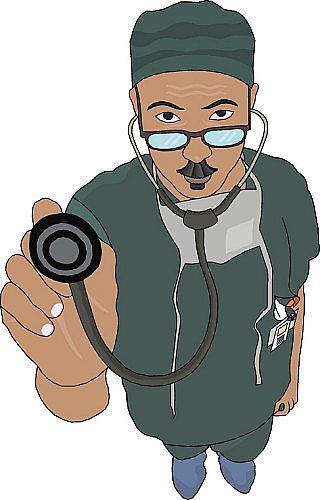
Physician's Advice on Exercise


Whenever you read about exercising, you often see the caution from an author about talking to your physician before you start any exercise program. This is sound advice, as long as you don't take it too far. Because of this common caution, many people seem to think that physicians are experts on exercise. That isn't usually the case.

Most physicians are trained in working with diseases and how to cure them. They don't know much more about putting together a proper exercise program than the average, educated adult.

If you have an existing medical condition, or you've been told you have certain risk factors (such as: being a smoker, or being excessively overweight) you definitely should talk to your physician before you start an exercise program. But, talking to them, and getting exercise program advice from them, are two different things.

If you have a good physician, he or she will probably give you clearance to exercise and tell you if there is anything you need to be careful about. They may suggest you have an exercise physiologist or an experienced trainer design and supervise a sensible program. If you have a severe medical condition, they may suggest that you join a supervised exercise program such as a cardiac rehab program at a medical facility or hospital.

It seems to me that too many people use the need for talking to their physician as an excuse for not starting an exercise program. They just can't find the time for an appointment, or they don't want to pay for an extra visit. Well, if you're generally in good health and see your physician for regular check ups, you probably don't need to check in with them before starting an exercise program. Of course if it's been a long time since you did any exercise, you're over 65, or you have a specific medical condition, it sure would make sense to at least call your physician and tell them what you want to do.

In almost all cases, the benefits of a sensible exercise program far outweigh the precautions you may need to take. So:


  • check in with your physician if it's necessary,


  • have a professional design a sensible program for you, and


  • start doing some exercising on a regular basis©2005 Thomas D. Manfredi


  • Online fitness coach Tom Manfredi is the creator of the site "fitness-after-50". He has a master's degree in exercise physiology and over 20 years of practical exercise experience.

    This site is designed with the mature adult in mind. There is a lot of information available on the site for anyone looking to start or restart a sensible exercise program. Learn more by going to fitness-after-50.com

    Article Source: http://EzineArticles.com/?expert=Tom_Manfredi

    Tuesday, June 1, 2010

    Wide Grip Lat Pull Down


    1. Sit down on a pull-down machine with a wide bar attached to the top pulley. Make sure that you adjust the knee pad of the machine to fit your height. These pads will prevent your body from being raised by the resistance attached to the bar.

    2. Grab the bar with the palms facing forward using the prescribed grip. Note on grips: For a wide grip, your hands need to be spaced out at a distance wider than shoulder width. For a medium grip, your hands need to be spaced out at a distance equal to your shoulder width and for a close grip at a distance smaller than your shoulder width.

    3. As you have both arms extended in front of you holding the bar at the chosen grip width, bring your torso back around 30 degrees or so while creating a curvature on your lower back and sticking your chest out. This is your starting position.

    4. As you breathe out, bring the bar down until it touches your upper chest by drawing the shoulders and the upper arms down and back. Tip: Concentrate on squeezing the back muscles once you reach the full contracted position. The upper torso should remain stationary and only the arms should move. The forearms should do no other work except for holding the bar; therefore do not try to pull down the bar using the forearms.

    5. After a second at the contracted position squeezing your shoulder blades together, slowly raise the bar back to the starting position when your arms are fully extended and the lats are fully stretched. Inhale during this portion of the movement.

    6. Repeat this motion for the prescribed amount of repetitions.


    Variations: The behind the neck variation is not recommended as it can be hard on the rotator cuff due to the hyperextension created by bringing the bar behind the neck.


    Pull Ups


    1. Grab the pull-up bar with the palms facing forward using the prescribed grip. Note on grips: For a wide grip, your hands need to be spaced out at a distance wider than your shoulder width. For a medium grip, your hands need to be spaced out at a distance equal to your shoulder width and for a close grip at a distance smaller than your shoulder width.

    2. As you have both arms extended in front of you holding the bar at the chosen grip width, bring your torso back around 30 degrees or so while creating a curvature on your lower back and sticking your chest out. This is your starting position.

    3. Pull your torso up until the bar touches your upper chest by drawing the shoulders and the upper arms down and back. Exhale as you perform this portion of the movement. Tip: Concentrate on squeezing the back muscles once you reach the full contracted position. The upper torso should remain stationary as it moves through space and only the arms should move. The forearms should do no other work other than hold the bar.

    4. After a second on the contracted position, start to inhale and slowly lower your torso back to the starting position when your arms are fully extended and the lats are fully stretched.

    5. Repeat this motion for the prescribed amount of repetitions.


    Variations:

    • If you are new at this exercise and do not have the strength to perform it, use a chin assist machine if available. These machines use weight to help you push your bodyweight.

    • Otherwise, a spotter holding your legs can help.

    • On the other hand, more advanced lifters can add weight to the exercise by using a weight belt that allows the addition of weighted plates.

    • The behind the neck variation is not recommended as it can be hard on the rotator cuff due to the hyperextension created by bringing the bar behind the neck.


    Wednesday, May 5, 2010

    Chin-Up


    1. Grab the pull-up bar with the palms facing your torso and a grip closer than the shoulder width.

    2. As you have both arms extended in front of you holding the bar at the chosen grip width, keep your torso as straight as possible while creating a curvature on your lower back and sticking your chest out. This is your starting position. Tip: Keeping the torso as straight as possible maximizes biceps stimulation while minimizing back involvement.

    3. As you breathe out, pull your torso up until your head is around the level of the pull-up bar. Concentrate on using the biceps muscles in order to perform the movement. Keep the elbows close to your body. Tip: The upper torso should remain stationary as it moves through space and only the arms should move. The forearms should do no other work other than hold the bar.

    4. After a second of squeezing the biceps in the contracted position, slowly lower your torso back to the starting position; when your arms are fully extended. Breathe in as you perform this portion of the movement.

    5. Repeat this motion for the prescribed amount of repetitions.


    Variations:

    • If you are new at this exercise and do not have the strength to perform it, use a pull-up assist machine if available. These machines use weight to help you push your bodyweight.

    • Otherwise, a spotter holding your legs can help.

    • On the other hand, more advanced lifters can add weight to the exercise by using a weight belt that allows the addition of weighted plates.


    Related Posts Plugin for WordPress, Blogger...